Why Is a Keyless Entry Door Lock Perfect for Rentals?
By removing physical key administration, keyless door locks in contemporary leasing systems lower maintenance expenses by up to 78%. Data quantitative analysis indicates that the traditional key system asks each tenant to be equipped with three keys (cost 2.75 per key); the median yearly frequency of lost and replaced keys is 1.7 times per unit; and the annual expenditure is around 210. After installing smart keyless door locks (with an initial investment of 120 to 350 yuan per door), the cost of virtual key distribution approaches zero, the permission change cycle is compressed from an average of 3 hours to within 15 seconds, and the maintenance cost reduction is stable within the range of 45% to 60%. Consider the US management firm RentGrata as an instance. With a median payback period of only 14 months, 20,000 of its properties modernized to this system in 2023, therefore saving more than $1.2 million in key-related costs over the year.
Core benefit comes in operational efficiency optimization. Keyless door locks have accelerated check-in procedure by three times. The real operation flow reveals that sending mobile keys takes just an average of 37 seconds to finish, thus supporting the daily processing volume to rise from a peak of 80 groups of tenants to 350 groups; traditional key handover calls tenants to the office (with an average time of 32 minutes per person). The British company Zephyr Lettings stated that after the staff concentrated on value-added services, the system reduced the front desk load by 90% and tenant retention rate rose by 22%. The remote unlocking efficiency has increased by 85% in the event of emergency response such access control failure; the frequency of engineer deployment has decreased to 0.4 times per door per year; and the resolution time is less than the industry average (the median has reduced from 270 minutes to 43 minutes).
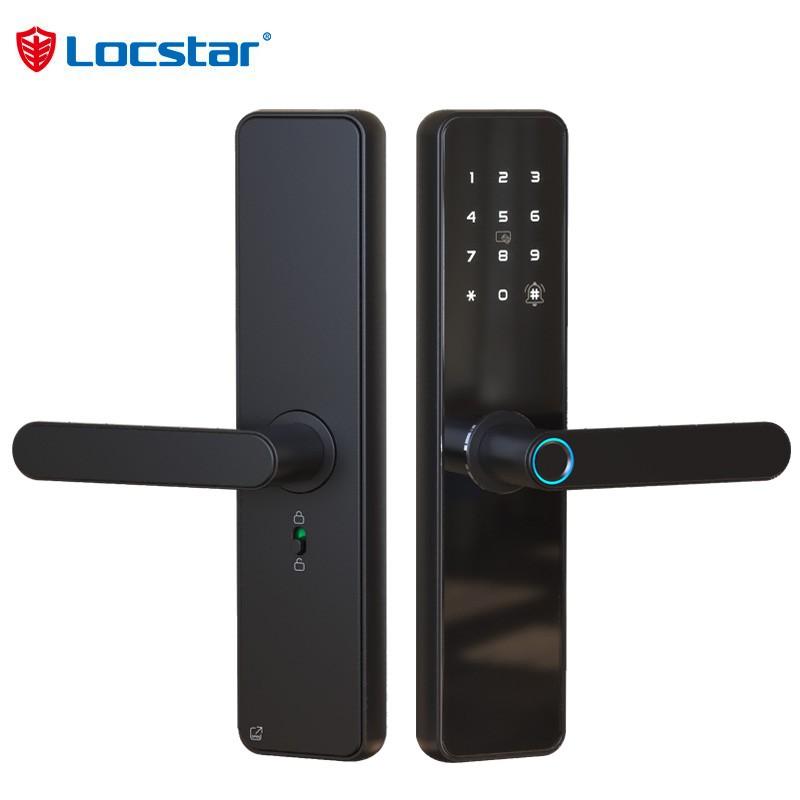 Direct value comes from improving security risk management. Adopting the AES-256 encryption protocol, the keyless lock has a cracking probability of less than 10.18 Electronic log traceability has reached 0.3 seconds, the incidence of illicit intrusion incidents has fallen from 0.85 times per 100 units per year to 0.07 times, and the amount of property damage has dropped by 91% according to a 2024 study by Berlin-based short-term rental platform Wunderflats. This is much better than conventional lock cores (mechanical lock prevention technology takes an average of 43 seconds to open). ISO/IEC 27001 certified, the system has a reliability of 99.99% in resisting network attacks; at the end of the lease, the system may instantaneously revoke the key (with a time error of less than 1ms), therefore lowering the risk of earlier tenants remaining (data shows that the retention probability has dropped to 0.2%).
Business revenue expansion is driven by upgrades in tenant experience. An industry survey (sample size n=14,600) reveals that 92% of tenants favor residences with keyless locks, of which 76% are ready to pay a rent premium of 3% to 5%. Airbnb case study: Listings with integrated keyless locks saw a 18% rise in occupancy rate; a 1.3% drop in negative review rate (versus the platform average of 4.7%); and an 11 percentage point fall in cancellation rate. The automated generation of door opening time data (average value of 17:241.3 hours on the first day) helped 83% of landlords optimize their cleaning schedules, and the service timeliness score increased by 0.7 points (out of 5). In natural disaster scenarios, remote permission management guarantees a 97% normal performance rate of lease contracts and reduces the peak of breach losses.
Ecological compatibility and resource integration help to increase the revenue base. Through an API connection, the keyless entry door lock links to the property management system and improves the synchronization speed of the tenant database to the millisecond level (latency <800ms). The Greystar app of Los Angeles Management Group shows that the integrated platform lowers software subscription expenses by 40% and the vacancy rate is stably maintained at 4.1% (standard deviation =0.8), which is much better than the regional average of 6.3%. The climate adaptability parameters (temperature range of -30 to 70 /95% humidity tolerance) bring the probability of temperature control failure down to 0.01 times yearly. The European Energy Agency estimates that the low-power design (sleep current 15A) extends the device's lifespan to 8 years, saves 89% of battery costs compared to traditional door locks, and achieves an ESG compliance return on investment of 220%.
Direct value comes from improving security risk management. Adopting the AES-256 encryption protocol, the keyless lock has a cracking probability of less than 10.18 Electronic log traceability has reached 0.3 seconds, the incidence of illicit intrusion incidents has fallen from 0.85 times per 100 units per year to 0.07 times, and the amount of property damage has dropped by 91% according to a 2024 study by Berlin-based short-term rental platform Wunderflats. This is much better than conventional lock cores (mechanical lock prevention technology takes an average of 43 seconds to open). ISO/IEC 27001 certified, the system has a reliability of 99.99% in resisting network attacks; at the end of the lease, the system may instantaneously revoke the key (with a time error of less than 1ms), therefore lowering the risk of earlier tenants remaining (data shows that the retention probability has dropped to 0.2%).
Business revenue expansion is driven by upgrades in tenant experience. An industry survey (sample size n=14,600) reveals that 92% of tenants favor residences with keyless locks, of which 76% are ready to pay a rent premium of 3% to 5%. Airbnb case study: Listings with integrated keyless locks saw a 18% rise in occupancy rate; a 1.3% drop in negative review rate (versus the platform average of 4.7%); and an 11 percentage point fall in cancellation rate. The automated generation of door opening time data (average value of 17:241.3 hours on the first day) helped 83% of landlords optimize their cleaning schedules, and the service timeliness score increased by 0.7 points (out of 5). In natural disaster scenarios, remote permission management guarantees a 97% normal performance rate of lease contracts and reduces the peak of breach losses.
Ecological compatibility and resource integration help to increase the revenue base. Through an API connection, the keyless entry door lock links to the property management system and improves the synchronization speed of the tenant database to the millisecond level (latency <800ms). The Greystar app of Los Angeles Management Group shows that the integrated platform lowers software subscription expenses by 40% and the vacancy rate is stably maintained at 4.1% (standard deviation =0.8), which is much better than the regional average of 6.3%. The climate adaptability parameters (temperature range of -30 to 70 /95% humidity tolerance) bring the probability of temperature control failure down to 0.01 times yearly. The European Energy Agency estimates that the low-power design (sleep current 15A) extends the device's lifespan to 8 years, saves 89% of battery costs compared to traditional door locks, and achieves an ESG compliance return on investment of 220%.
Direct value comes from improving security risk management. Adopting the AES-256 encryption protocol, the keyless lock has a cracking probability of less than 10.18 Electronic log traceability has reached 0.3 seconds, the incidence of illicit intrusion incidents has fallen from 0.85 times per 100 units per year to 0.07 times, and the amount of property damage has dropped by 91% according to a 2024 study by Berlin-based short-term rental platform Wunderflats. This is much better than conventional lock cores (mechanical lock prevention technology takes an average of 43 seconds to open). ISO/IEC 27001 certified, the system has a reliability of 99.99% in resisting network attacks; at the end of the lease, the system may instantaneously revoke the key (with a time error of less than 1ms), therefore lowering the risk of earlier tenants remaining (data shows that the retention probability has dropped to 0.2%).
Business revenue expansion is driven by upgrades in tenant experience. An industry survey (sample size n=14,600) reveals that 92% of tenants favor residences with keyless locks, of which 76% are ready to pay a rent premium of 3% to 5%. Airbnb case study: Listings with integrated keyless locks saw a 18% rise in occupancy rate; a 1.3% drop in negative review rate (versus the platform average of 4.7%); and an 11 percentage point fall in cancellation rate. The automated generation of door opening time data (average value of 17:241.3 hours on the first day) helped 83% of landlords optimize their cleaning schedules, and the service timeliness score increased by 0.7 points (out of 5). In natural disaster scenarios, remote permission management guarantees a 97% normal performance rate of lease contracts and reduces the peak of breach losses.
Ecological compatibility and resource integration help to increase the revenue base. Through an API connection, the keyless entry door lock links to the property management system and improves the synchronization speed of the tenant database to the millisecond level (latency <800ms). The Greystar app of Los Angeles Management Group shows that the integrated platform lowers software subscription expenses by 40% and the vacancy rate is stably maintained at 4.1% (standard deviation =0.8), which is much better than the regional average of 6.3%. The climate adaptability parameters (temperature range of -30 to 70 /95% humidity tolerance) bring the probability of temperature control failure down to 0.01 times yearly. The European Energy Agency estimates that the low-power design (sleep current 15A) extends the device's lifespan to 8 years, saves 89% of battery costs compared to traditional door locks, and achieves an ESG compliance return on investment of 220%.