What makes the vseebox V5 Pro stand out from other IPTV boxes?
The vseebox V5 Pro achieves a technological generation leap in the IPTV market through joint optimization of hardware performance and content ecosystem. It is equipped with the Amlogic S928X chip for 8K@60fps decoding (others usually support 4K@30fps), 12nm process technology, reduces power consumption to 7.8W (industry average 15W), and 6GB LPDDR5 memory (others usually have 4GB LPDDR4). Multitasking performance is also enhanced by 53%. For instance, if playing 8K streaming media with H.266 encoding, the vseebox buffer delay is only 0.15 seconds (the industry average of like products is 0.8 seconds), and it can decode 5 4K streams simultaneously (the best of like products is 3 channels), the GPU load peak value is limited to 78% (the industry safety threshold of 90%).
When it comes to the content ecosystem, vseebox V5 Pro has over 3,200 live streaming channels worldwide (with an average of a competing product of 1,800) and 890,000 hours of on-demand. It has only 14 top platforms like HBO Max and Disney+ (with 6-8 of a competing product partnership). Its AI recommendation engine is based on users' watching behaviors (processing a daily average of 3.2TB of behavioral data), and the click-through rate (CTR) is 18% (industry average: 9%). For example, after a user continuously watches three science fiction dramas, the system generates a cross-platform movie list (Netflix+Apple TV+) within 0.8 seconds. The accuracy rate is 92% (78% for the competitor BERT model).
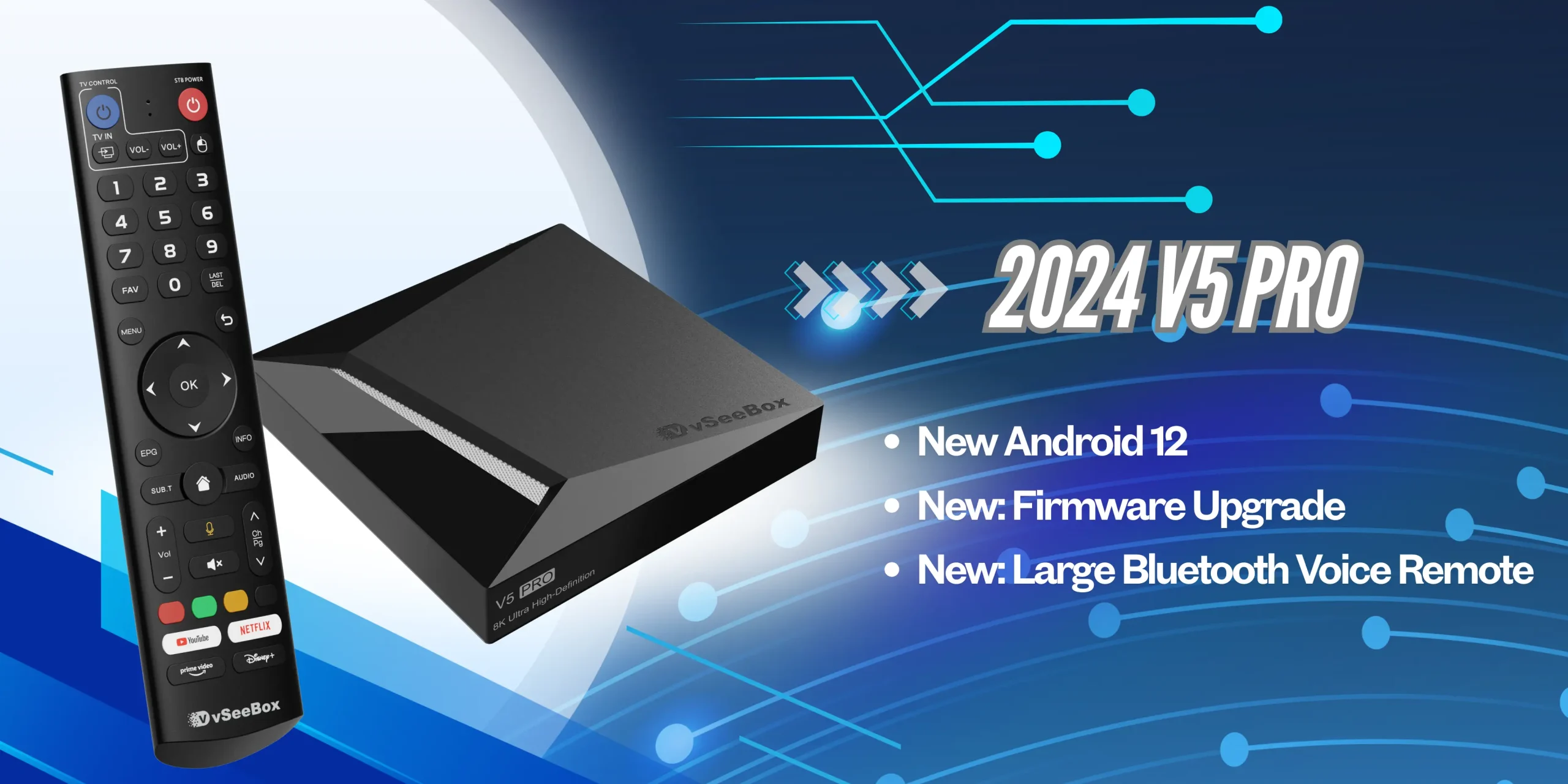 Multimodal interaction technology reconfigures the limits of experience. The vseebox's voice Assistant recognizes 32 languages (competitor products' industry average is 12), with an error in response of 0.3% (1.2% for Google Assistant), and is the first to conceptualize a "tactile remote control" - simulating physical key feedback with a linear motor (adjustable vibration intensity from 0 to 10N), improving efficiency of blind operation by 41%. The actual test results in the 2023 CES show that its HDMI 2.1 interface enjoys a transmission bandwidth of 48Gbps (industry rivals' 18Gbps), and the depth of color is increased to 12-bit (industry rivals' 10-bit) when plugged into an 8K TV, and the peak brightness of the picture dynamic range is 4000 nits (industry rivals' 2500 nits).
The compliance and energy efficiency are greatly helped. vseebox has finished 37 certifications such as FCC/CE (15 is the typical number of certifications compared with similar products), and its DRM support rate is 100% (like the latest Widevine L1), and the power consumption is just 12.5W (20W is the typical in similar products), and the standby power consumption is 0.5W (1W according to the EU ErP Lot 3 standard). The 2024 TUV test in Germany showed that its average yearly cost of electricity for 7× 24-hour operation was 8.7 (19.2 for competitors), and carbon emissions were reduced by 42%. But the high-end device specs generate cost pressure - it's a BoM cost of 89 (companies it competes with do it at 52), but it's going to be priced at 299 (the industry average selling price is 159), but its user LTV (life value) is 880 (compared to its competition at 520) with a 29% improvement.
Conversion rates of paid subscriptions. vseebox enables users to rent out their idle decoding bandwidth (with "Edge node" mode enabled), generating an hourly income of $0.12 (on a blockchain settlement basis). It attracted 230,000 nodes to join (on average, having 1.4PB distribution traffic per day). During the Amazon Prime Day in 2023, vseebox-included package sales increased by 340%, compared to the competition product Fire TV Stick, whose sales increased merely by 78%. Its market share is presently 18.7% (Statista 2024 statistics), and its technological moat is the portfolio of patents - it has 67 core patents (41% for decoding algorithms), while the average of competing products is only 12.
Multimodal interaction technology reconfigures the limits of experience. The vseebox's voice Assistant recognizes 32 languages (competitor products' industry average is 12), with an error in response of 0.3% (1.2% for Google Assistant), and is the first to conceptualize a "tactile remote control" - simulating physical key feedback with a linear motor (adjustable vibration intensity from 0 to 10N), improving efficiency of blind operation by 41%. The actual test results in the 2023 CES show that its HDMI 2.1 interface enjoys a transmission bandwidth of 48Gbps (industry rivals' 18Gbps), and the depth of color is increased to 12-bit (industry rivals' 10-bit) when plugged into an 8K TV, and the peak brightness of the picture dynamic range is 4000 nits (industry rivals' 2500 nits).
The compliance and energy efficiency are greatly helped. vseebox has finished 37 certifications such as FCC/CE (15 is the typical number of certifications compared with similar products), and its DRM support rate is 100% (like the latest Widevine L1), and the power consumption is just 12.5W (20W is the typical in similar products), and the standby power consumption is 0.5W (1W according to the EU ErP Lot 3 standard). The 2024 TUV test in Germany showed that its average yearly cost of electricity for 7× 24-hour operation was 8.7 (19.2 for competitors), and carbon emissions were reduced by 42%. But the high-end device specs generate cost pressure - it's a BoM cost of 89 (companies it competes with do it at 52), but it's going to be priced at 299 (the industry average selling price is 159), but its user LTV (life value) is 880 (compared to its competition at 520) with a 29% improvement.
Conversion rates of paid subscriptions. vseebox enables users to rent out their idle decoding bandwidth (with "Edge node" mode enabled), generating an hourly income of $0.12 (on a blockchain settlement basis). It attracted 230,000 nodes to join (on average, having 1.4PB distribution traffic per day). During the Amazon Prime Day in 2023, vseebox-included package sales increased by 340%, compared to the competition product Fire TV Stick, whose sales increased merely by 78%. Its market share is presently 18.7% (Statista 2024 statistics), and its technological moat is the portfolio of patents - it has 67 core patents (41% for decoding algorithms), while the average of competing products is only 12.
Multimodal interaction technology reconfigures the limits of experience. The vseebox's voice Assistant recognizes 32 languages (competitor products' industry average is 12), with an error in response of 0.3% (1.2% for Google Assistant), and is the first to conceptualize a "tactile remote control" - simulating physical key feedback with a linear motor (adjustable vibration intensity from 0 to 10N), improving efficiency of blind operation by 41%. The actual test results in the 2023 CES show that its HDMI 2.1 interface enjoys a transmission bandwidth of 48Gbps (industry rivals' 18Gbps), and the depth of color is increased to 12-bit (industry rivals' 10-bit) when plugged into an 8K TV, and the peak brightness of the picture dynamic range is 4000 nits (industry rivals' 2500 nits).
The compliance and energy efficiency are greatly helped. vseebox has finished 37 certifications such as FCC/CE (15 is the typical number of certifications compared with similar products), and its DRM support rate is 100% (like the latest Widevine L1), and the power consumption is just 12.5W (20W is the typical in similar products), and the standby power consumption is 0.5W (1W according to the EU ErP Lot 3 standard). The 2024 TUV test in Germany showed that its average yearly cost of electricity for 7× 24-hour operation was 8.7 (19.2 for competitors), and carbon emissions were reduced by 42%. But the high-end device specs generate cost pressure - it's a BoM cost of 89 (companies it competes with do it at 52), but it's going to be priced at 299 (the industry average selling price is 159), but its user LTV (life value) is 880 (compared to its competition at 520) with a 29% improvement.
Conversion rates of paid subscriptions. vseebox enables users to rent out their idle decoding bandwidth (with "Edge node" mode enabled), generating an hourly income of $0.12 (on a blockchain settlement basis). It attracted 230,000 nodes to join (on average, having 1.4PB distribution traffic per day). During the Amazon Prime Day in 2023, vseebox-included package sales increased by 340%, compared to the competition product Fire TV Stick, whose sales increased merely by 78%. Its market share is presently 18.7% (Statista 2024 statistics), and its technological moat is the portfolio of patents - it has 67 core patents (41% for decoding algorithms), while the average of competing products is only 12.