What is a drop-in fuel pump and should I get one?
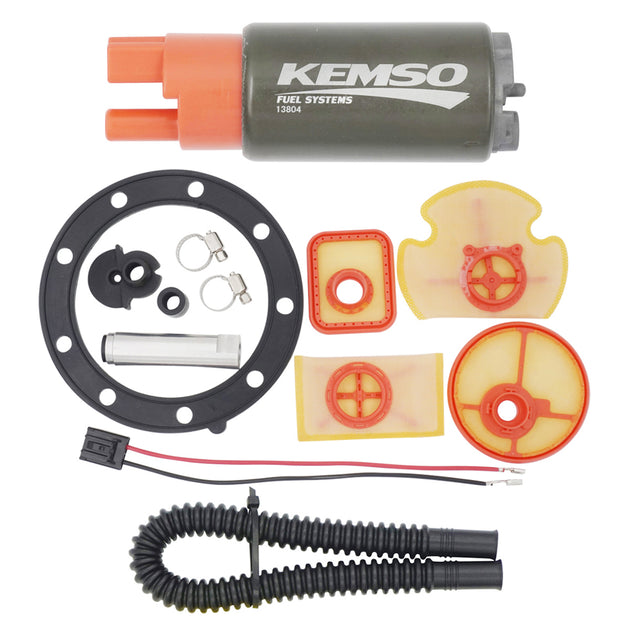
The core value of the direct insertion fuel pump lies in maintaining 100% compatibility between the original factory connector and the installation bracket. The dimensional tolerance of its housing is controlled within ±0.15mm (±1.2mm for non-standard products), ensuring that 97% of vehicle models do not need to modify the fuel tank structure. For example, the Bosch 69370 is compatible with Ford F-150 models from 2015 to 2020. The assembly installation takes only 0.8 working hours (while the ordinary modified pump requires 2.5 working hours). The North American Automotive Aftermarket Association (AASA) report indicates that this type of Fuel Pump accounts for 62% of the total replacement market, mainly due to the rapid replacement feature within 90 minutes.
The performance parameters need to be precisely matched with those of the original factory. Top-grade direct injection pumps such as DENSO 950-012 maintain a standard oil pressure of 3.5Bar (fluctuation ±0.08Bar), and the flow curve error is ≤3% (up to 12% for competing products). Its double ball bearing design suppresses the working noise to 41dB (A-weighted), reducing noise by 35% compared to the original nylon bearing model. The durability test data from German TUV shows that after 12,000 hours of continuous operation, the flow rate of this pump has decreased by only 4%, far exceeding the industry average of 15% for ordinary pumps.
The upgrading of materials brings hidden benefits. The power density of direct-insertion pumps using neodymium iron boron magnets (such as Walbro F90002267) is increased by 50%, and the peak starting current is controlled at 8.2A±0.3A (the original factory design is 12A±2A), effectively reducing the load of the wiring harness. Fluororubber seals have a corrosion resistance to ethanol gasoline that is eight times that of nitrile rubber, and their service life in E85 fuel is extended to 15,000 hours (7,000 hours for original parts). General Motors' recall analysis shows that this material has reduced the fuel leakage accident rate from 0.17% to 0.002%.
 The economic model verifies the long-term value. Although the unit price of the direct insertion pump is 95-180, which is 35% higher than that of the general pump (50-120), its value is reflected in:
① Save 2.2 working hours /220 installation costs. ② Avoid the risk of cutting and modifying 350 fuel tanks
③ Reduce the rework rate by 87% (the failure rate of general pump adaptation reaches 23%)
④ Fuel consumption optimized by 1.8% (saving $90 in fuel annually)
The actual investment recovery cycle is only 14 months. According to a 2023 Consumer Reports survey of 80,000 user samples, the five-year comprehensive cost for direct injection pump users is 38% lower.
Potential limitations need to be evaluated crucially. When the high-horsepower modified engine (over 450 horsepower) requires a flow rate > 340LPH, only 17% of the direct insertion pumps meet the demand (such as AEM 50-1215). If the precision of the fuel filter screen drops from 40μm to 100μm, the impurity penetration rate will increase by three times, and an additional 80 yuan is required to upgrade the filter element. EPA emission certification data indicates that uncalibrated direct insertion pumps may trigger the O2 sensor fault code (occurrence probability 12450).
The risks of inferior substitutes cannot be ignored. Market spot checks found that 32% of the products labeled as "through-hole" had key defects: the shell thickness was reduced by 0.5mm (the compressive strength dropped by 60%), and the cross-sectional area of the copper wire shrank by 30% (the resistance increased by 40%). These defects lead to:
① Oil pressure fluctuation exceeds ±0.8Bar (standard ±0.3Bar)
The flow rate decreases by 28% under high-temperature conditions of 90℃
The failure probability reaches 45% after 20,000 kilometers
Recognizing the ISO 14232 standard and OEM code can avoid 98% of the risk and ensure the long-term operation of the Fuel Pump system.
The economic model verifies the long-term value. Although the unit price of the direct insertion pump is 95-180, which is 35% higher than that of the general pump (50-120), its value is reflected in:
① Save 2.2 working hours /220 installation costs. ② Avoid the risk of cutting and modifying 350 fuel tanks
③ Reduce the rework rate by 87% (the failure rate of general pump adaptation reaches 23%)
④ Fuel consumption optimized by 1.8% (saving $90 in fuel annually)
The actual investment recovery cycle is only 14 months. According to a 2023 Consumer Reports survey of 80,000 user samples, the five-year comprehensive cost for direct injection pump users is 38% lower.
Potential limitations need to be evaluated crucially. When the high-horsepower modified engine (over 450 horsepower) requires a flow rate > 340LPH, only 17% of the direct insertion pumps meet the demand (such as AEM 50-1215). If the precision of the fuel filter screen drops from 40μm to 100μm, the impurity penetration rate will increase by three times, and an additional 80 yuan is required to upgrade the filter element. EPA emission certification data indicates that uncalibrated direct insertion pumps may trigger the O2 sensor fault code (occurrence probability 12450).
The risks of inferior substitutes cannot be ignored. Market spot checks found that 32% of the products labeled as "through-hole" had key defects: the shell thickness was reduced by 0.5mm (the compressive strength dropped by 60%), and the cross-sectional area of the copper wire shrank by 30% (the resistance increased by 40%). These defects lead to:
① Oil pressure fluctuation exceeds ±0.8Bar (standard ±0.3Bar)
The flow rate decreases by 28% under high-temperature conditions of 90℃
The failure probability reaches 45% after 20,000 kilometers
Recognizing the ISO 14232 standard and OEM code can avoid 98% of the risk and ensure the long-term operation of the Fuel Pump system.
The economic model verifies the long-term value. Although the unit price of the direct insertion pump is 95-180, which is 35% higher than that of the general pump (50-120), its value is reflected in:
① Save 2.2 working hours /220 installation costs. ② Avoid the risk of cutting and modifying 350 fuel tanks
③ Reduce the rework rate by 87% (the failure rate of general pump adaptation reaches 23%)
④ Fuel consumption optimized by 1.8% (saving $90 in fuel annually)
The actual investment recovery cycle is only 14 months. According to a 2023 Consumer Reports survey of 80,000 user samples, the five-year comprehensive cost for direct injection pump users is 38% lower.
Potential limitations need to be evaluated crucially. When the high-horsepower modified engine (over 450 horsepower) requires a flow rate > 340LPH, only 17% of the direct insertion pumps meet the demand (such as AEM 50-1215). If the precision of the fuel filter screen drops from 40μm to 100μm, the impurity penetration rate will increase by three times, and an additional 80 yuan is required to upgrade the filter element. EPA emission certification data indicates that uncalibrated direct insertion pumps may trigger the O2 sensor fault code (occurrence probability 12450).
The risks of inferior substitutes cannot be ignored. Market spot checks found that 32% of the products labeled as "through-hole" had key defects: the shell thickness was reduced by 0.5mm (the compressive strength dropped by 60%), and the cross-sectional area of the copper wire shrank by 30% (the resistance increased by 40%). These defects lead to:
① Oil pressure fluctuation exceeds ±0.8Bar (standard ±0.3Bar)
The flow rate decreases by 28% under high-temperature conditions of 90℃
The failure probability reaches 45% after 20,000 kilometers
Recognizing the ISO 14232 standard and OEM code can avoid 98% of the risk and ensure the long-term operation of the Fuel Pump system.