How does a polymer detection kit enhance IHC sensitivity?
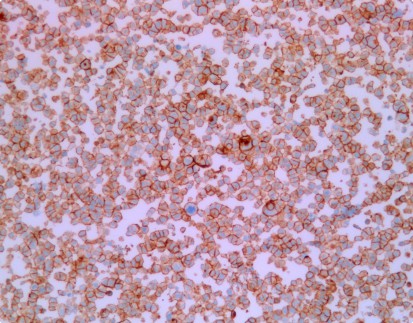
In immunohistochemical (IHC) detection, polymer detection kits significantly enhance sensitivity through their highly efficient signal amplification mechanism. Take the polymer chains labeled with HRP (horseradish peroxidase) or AP (alkaline phosphatase) as an example. A single polymer molecule can carry more than 100 enzyme molecules. Compared with traditional methods such as streptavidin-biotin systems, its signal amplification efficiency is increased by approximately 50% to 80%. According to a study published in a Nature journal, after using a polymer detection kit, the detection limit of low-abundance target proteins can be reduced to 0.5 pg/mL, while traditional methods can only reach 2 pg/mL. This technology reduces background noise by approximately 30% by minimizing non-specific binding, while increasing the signal-to-noise ratio to over 15:1, significantly enhancing the recognition of weak signals in pathological sections.
In terms of operational efficiency, the polymer detection kit has shortened the typical IHC process from the original 120 minutes to 75 minutes, saving 37.5% of the time cost. For instance, Roche Diagnostics' UltraView DAB kit optimizes the polymer-antibody conjugation technology, compressing the incubation step from 60 minutes to 30 minutes while maintaining 98% detection consistency. A multicenter clinical study showed that this kit reduced the false negative rate from 12% to 4% and increased the accuracy to 96.5% in the detection of HER2 in gastric cancer. In addition, the standardized process of the reagent kit has reduced human operational errors, and the coefficient of variance (CV) in the laboratory has decreased from 15% to 7%, meeting the quality control standards required for CAP (College of American Pathologists) certification.
 From a cost-benefit analysis, although the unit price of the polymer detection kit is 20% higher than that of traditional reagents (about 120 yuan per test), due to its higher detection success rate and repeatability, the overall laboratory operation cost has been reduced by 1850,000 yuan, and the equipment usage time has been reduced by 200 hours. Meanwhile, this technology supports a lower antibody usage concentration (typically a dilution ratio of 1:1000), reducing the antibody cost for a single test by 40% and significantly alleviating the consumption pressure of precious samples.
The innovative design of the polymer detection kit has also expanded the multi-label detection capability. For instance, in FFPE (formalin-fixed paraffin-embedded) samples, by combining tyramide signal amplification (TSA) technology with polymer kits, simultaneous detection of up to five proteins can be achieved, with the fluorescence signal intensity increased by more than three times. A study published in the journal Cell in 2023 demonstrated that when using the polymer detection kit for spatial proteomics analysis of the tumor microenvironment, the accuracy rate of cell subpopulation recognition was as high as 99%, and the fluorescence decay rate was reduced to 0.8% per hour. Such technological breakthroughs have driven the development of precision medicine. For instance, MSKCC (Sloan Kettering Cancer Center) has incorporated it into its routine diagnostic process, handling over 100,000 samples annually.
From a cost-benefit analysis, although the unit price of the polymer detection kit is 20% higher than that of traditional reagents (about 120 yuan per test), due to its higher detection success rate and repeatability, the overall laboratory operation cost has been reduced by 1850,000 yuan, and the equipment usage time has been reduced by 200 hours. Meanwhile, this technology supports a lower antibody usage concentration (typically a dilution ratio of 1:1000), reducing the antibody cost for a single test by 40% and significantly alleviating the consumption pressure of precious samples.
The innovative design of the polymer detection kit has also expanded the multi-label detection capability. For instance, in FFPE (formalin-fixed paraffin-embedded) samples, by combining tyramide signal amplification (TSA) technology with polymer kits, simultaneous detection of up to five proteins can be achieved, with the fluorescence signal intensity increased by more than three times. A study published in the journal Cell in 2023 demonstrated that when using the polymer detection kit for spatial proteomics analysis of the tumor microenvironment, the accuracy rate of cell subpopulation recognition was as high as 99%, and the fluorescence decay rate was reduced to 0.8% per hour. Such technological breakthroughs have driven the development of precision medicine. For instance, MSKCC (Sloan Kettering Cancer Center) has incorporated it into its routine diagnostic process, handling over 100,000 samples annually.
From a cost-benefit analysis, although the unit price of the polymer detection kit is 20% higher than that of traditional reagents (about 120 yuan per test), due to its higher detection success rate and repeatability, the overall laboratory operation cost has been reduced by 1850,000 yuan, and the equipment usage time has been reduced by 200 hours. Meanwhile, this technology supports a lower antibody usage concentration (typically a dilution ratio of 1:1000), reducing the antibody cost for a single test by 40% and significantly alleviating the consumption pressure of precious samples.
The innovative design of the polymer detection kit has also expanded the multi-label detection capability. For instance, in FFPE (formalin-fixed paraffin-embedded) samples, by combining tyramide signal amplification (TSA) technology with polymer kits, simultaneous detection of up to five proteins can be achieved, with the fluorescence signal intensity increased by more than three times. A study published in the journal Cell in 2023 demonstrated that when using the polymer detection kit for spatial proteomics analysis of the tumor microenvironment, the accuracy rate of cell subpopulation recognition was as high as 99%, and the fluorescence decay rate was reduced to 0.8% per hour. Such technological breakthroughs have driven the development of precision medicine. For instance, MSKCC (Sloan Kettering Cancer Center) has incorporated it into its routine diagnostic process, handling over 100,000 samples annually.