Can Stylish Prescription Glasses Also Be Affordable?
Over the past decade, supply chain optimization in the eyewear industry has reduced the overall cost of stylish prescription glasses by 40-60%. According to McKinsey's 2024 Supply Chain research report, by integrating manufacturing resources in China and Southeast Asia, brands can reduce the production cost of spectacle frames to below $20 (traditional channels cost $50-70), and shorten the logistics time to within 7 days (previously the cycle was about 15-20 days). For instance, after Italian manufacturer Safilo adopted an intelligent inventory management system in 2023, its product inventory turnover rate increased by 30%, unit storage costs decreased by 25%, and the prices of some fashionable items dropped from $199 to $119. Breakthroughs in materials science have also made significant contributions: The global expansion of production capacity of the high refractive index resin material MR-7 has led to a 15% drop in unit price, increasing the penetration rate of thin and light lenses with a thickness of only 1.74mm to 35% by 2024, and bringing the median price back to the range of $80 to $120 (the price range of the same specification products in 2019 was $150 to $220).
The explosion of the Internet Direct Selling model (DTC) has completely restructured the pricing system. Brands like Warby Parker have calculated the best cost-effectiveness ratio through data modeling: the order processing speed of their vertical e-commerce platforms reaches 60 orders per minute, which is 300% more efficient than traditional stores. Combined with their self-operated factories, the processing error of lenses is controlled within 0.1 diopter. This keeps the terminal price of the classic stylish prescription glasses at $95 (including 1.60 refractive index lenses), which is over 50% lower than that of similar products in boutiques. According to Nielsen's consumer behavior statistics, the median average transaction value on DTC platforms in 2023 was only $98, while in physical stores it reached $210. The key driving force lies in the DTC model eliminating the intermediate links, reducing the channel markup rate from 200% to 70%, and achieving the Pareto improvement in cost optimization - the price reduction leads to the expansion of the market size. The global online optical market size is expected to reach 24 billion US dollars in 2024, with an average annual growth rate of 12.5%.
Large-scale production and precise demand forecasting have further given rise to the ultimate cost performance. For instance, the fast fashion eyewear brand Zenni utilized AI algorithms to analyze the facial parameters of 20 million users and established a golden distribution model for the width of the nose pads and the length of the temple legs. Its database shows that the peak fit of the nose pads for Asian consumers is 14-16mm (16-18mm for European and American consumers). Based on this, the defect rate of the universal titanium alloy frames optimized has been reduced to below 3%. This intelligent manufacturing strategy keeps the average price of products within the range of 30 to 50 US dollars. Some best-selling products, such as cat-eye-shaped metal frames, have a monthly sales volume of over 100,000 pairs. It is worth noting the successful cases of the emerging brand Aixi in 2022: This brand positions itself as an affordable design brand. By collecting 600,000 facial shape data through communities, it has developed 12 basic style templates. Combined with an automated production line, it can produce 50,000 pairs of glasses per day, reducing the design to delivery cycle to 72 hours. The starting price is set at $49, and it aims to achieve an annual revenue of $120 million within two years, with a return rate of 25%.
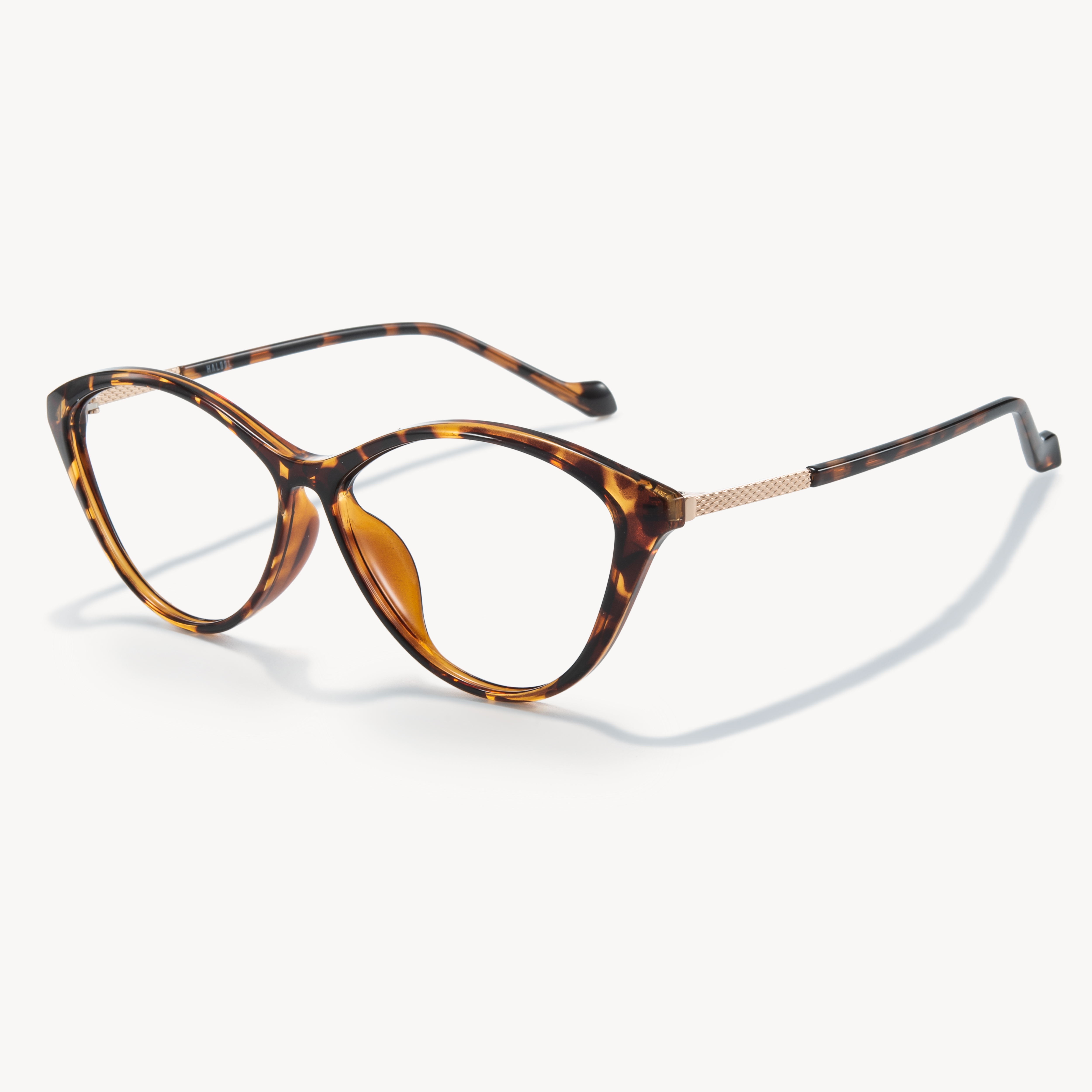 The quality assurance system has been upgraded and iterated simultaneously. Leading brands have all established dual quality control: Warby Parker's ISO 12870 standard compliance rate has reached 99.3%. The 2023 random inspection report shows that the tensile strength of its frame is 500N (the national standard requires 98N), and the durability of the hinge opening and closing test exceeds 15,000 times (the industry average is 5,000 times). Third-party verification is equally convincing: In a blind test of 3,000 pairs of low-priced glasses conducted by Consumer Reports in 2024, 68% of the products had a light transmittance exceeding 99.5% (the benchmark value for high-end brands is 99.8%), and the lowest dispersion coefficient reached 45 (the safety threshold is 30), proving that there is no generation gap in core optical performance. More importantly, there is service innovation: The 60-day no-reason return and exchange policy of the Eyebuydirect platform reduces consumer risks. Its user profile shows that the repurchase rate of the 25-40 age group is 52%, proving the sustainable business logic of "affordable and high-quality".
When data-driven manufacturing is deeply integrated with flexible supply chains, the pricing philosophy of stylish prescription glasses has been overturned - McKinsey's model estimates show that the target cost of high-quality design models can be reduced to within 30% of the retail price by 2025 (65% in 2010). This is essentially an efficiency revolution: from adopting parametric modeling at the design end to shorten the R&D cycle by 60%, to increasing production speed by 40% through machine vision quality inspection at the production end, and then to reducing transportation costs by 20% through intelligent warehouse distribution at the logistics end. With the popularization of sustainable materials (such as the proportion of recycled cellulose acetate increasing to 15%) and distributed manufacturing (3D printing capacity growing by 35% annually), it has become an inevitable trend that fashion and functionality will continue to decline at the price equilibrium point, ultimately bringing visual consumption back to its essential needs.
The quality assurance system has been upgraded and iterated simultaneously. Leading brands have all established dual quality control: Warby Parker's ISO 12870 standard compliance rate has reached 99.3%. The 2023 random inspection report shows that the tensile strength of its frame is 500N (the national standard requires 98N), and the durability of the hinge opening and closing test exceeds 15,000 times (the industry average is 5,000 times). Third-party verification is equally convincing: In a blind test of 3,000 pairs of low-priced glasses conducted by Consumer Reports in 2024, 68% of the products had a light transmittance exceeding 99.5% (the benchmark value for high-end brands is 99.8%), and the lowest dispersion coefficient reached 45 (the safety threshold is 30), proving that there is no generation gap in core optical performance. More importantly, there is service innovation: The 60-day no-reason return and exchange policy of the Eyebuydirect platform reduces consumer risks. Its user profile shows that the repurchase rate of the 25-40 age group is 52%, proving the sustainable business logic of "affordable and high-quality".
When data-driven manufacturing is deeply integrated with flexible supply chains, the pricing philosophy of stylish prescription glasses has been overturned - McKinsey's model estimates show that the target cost of high-quality design models can be reduced to within 30% of the retail price by 2025 (65% in 2010). This is essentially an efficiency revolution: from adopting parametric modeling at the design end to shorten the R&D cycle by 60%, to increasing production speed by 40% through machine vision quality inspection at the production end, and then to reducing transportation costs by 20% through intelligent warehouse distribution at the logistics end. With the popularization of sustainable materials (such as the proportion of recycled cellulose acetate increasing to 15%) and distributed manufacturing (3D printing capacity growing by 35% annually), it has become an inevitable trend that fashion and functionality will continue to decline at the price equilibrium point, ultimately bringing visual consumption back to its essential needs.
The quality assurance system has been upgraded and iterated simultaneously. Leading brands have all established dual quality control: Warby Parker's ISO 12870 standard compliance rate has reached 99.3%. The 2023 random inspection report shows that the tensile strength of its frame is 500N (the national standard requires 98N), and the durability of the hinge opening and closing test exceeds 15,000 times (the industry average is 5,000 times). Third-party verification is equally convincing: In a blind test of 3,000 pairs of low-priced glasses conducted by Consumer Reports in 2024, 68% of the products had a light transmittance exceeding 99.5% (the benchmark value for high-end brands is 99.8%), and the lowest dispersion coefficient reached 45 (the safety threshold is 30), proving that there is no generation gap in core optical performance. More importantly, there is service innovation: The 60-day no-reason return and exchange policy of the Eyebuydirect platform reduces consumer risks. Its user profile shows that the repurchase rate of the 25-40 age group is 52%, proving the sustainable business logic of "affordable and high-quality".
When data-driven manufacturing is deeply integrated with flexible supply chains, the pricing philosophy of stylish prescription glasses has been overturned - McKinsey's model estimates show that the target cost of high-quality design models can be reduced to within 30% of the retail price by 2025 (65% in 2010). This is essentially an efficiency revolution: from adopting parametric modeling at the design end to shorten the R&D cycle by 60%, to increasing production speed by 40% through machine vision quality inspection at the production end, and then to reducing transportation costs by 20% through intelligent warehouse distribution at the logistics end. With the popularization of sustainable materials (such as the proportion of recycled cellulose acetate increasing to 15%) and distributed manufacturing (3D printing capacity growing by 35% annually), it has become an inevitable trend that fashion and functionality will continue to decline at the price equilibrium point, ultimately bringing visual consumption back to its essential needs.