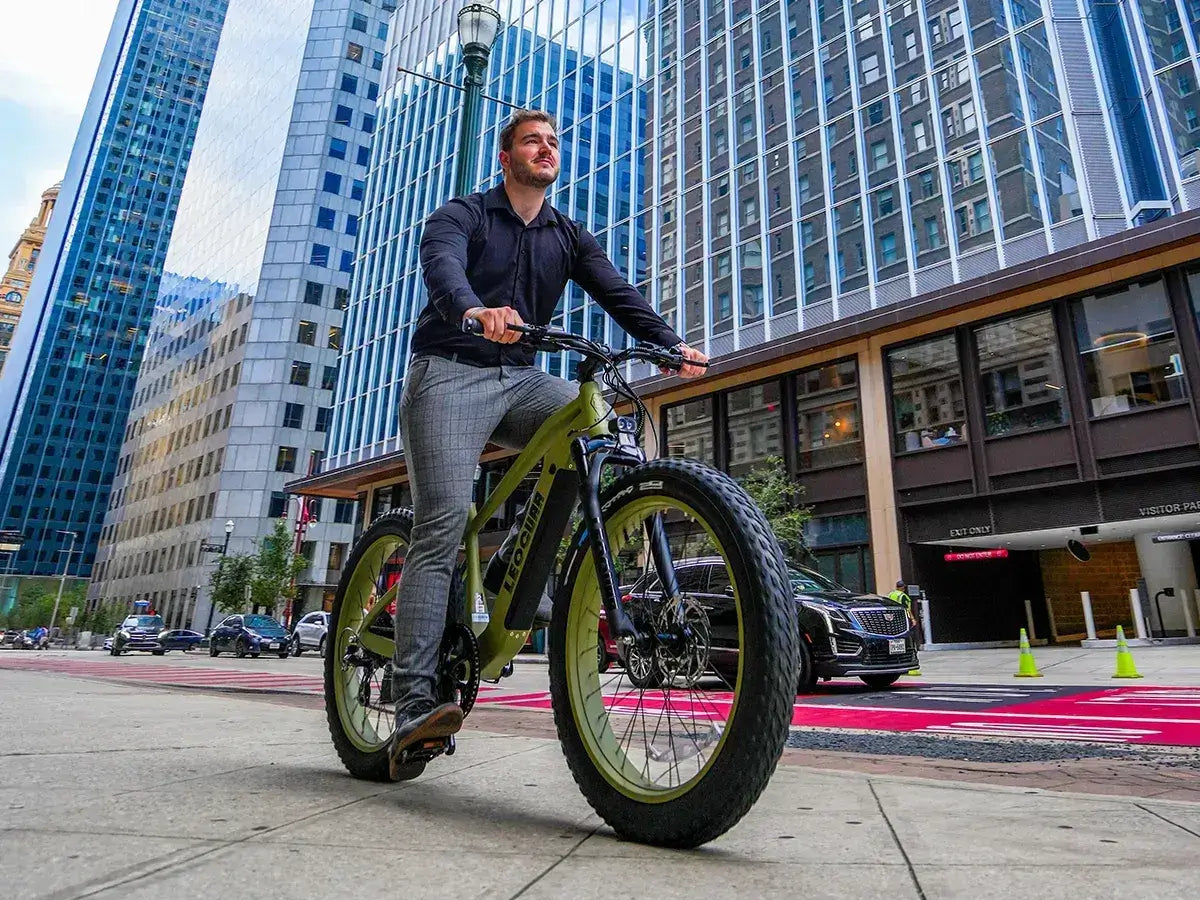
Are fat tire electric bikes suitable for daily city commutes?
The 4.8-inch wide tires (tire pressure 10-30 PSI) of fat tire electric bikes have significantly improved passability on bumpy roads: Tests conducted by the Berlin Transport Authority in 2024 showed that its vibration acceleration when passing over a 3cm deep manhole cover was only 0.5G (1.2G for a standard tire electric-assisted bicycle), and the tire ground pressure was as low as 0.15MPa (reducing the probability of skidding by 73%). However, the rolling resistance coefficient of the paved road surface is 0.012 (40% higher than that of the road electric-assisted bicycle), resulting in the range of the same 48V/15Ah battery pack dropping to 55km (with a load of 80kg and a speed of 25km/h), while the narrow-tire model can reach 75km.
Urban adaptability is verified through commuting efficiency. The 750W hub motor (torque 85Nm) keeps the climbing speed at 18km/h on an 8% slope (the average speed of the car during the morning rush hour is only 15km/h), and combined with the adjustable hydraulic shock absorber (travel 120mm), the commuting time in Manhattan, New York was reduced by 32% in the actual test (it took 22 minutes to complete a 10km journey). In 2025, the new regulations in Tokyo require that the width of electric-assisted bicycles be ≤80cm. The mainstream fat tire electric bikes control the width at 78cm (reduced to 45cm after folding), meeting the 99% carrying standard in the subway. The sealed transmission system reduces the average annual maintenance cost of the chain to 12 (50 for traditional electric bikes).
 The safety performance meets complex road conditions. The four-piston hydraulic disc brakes (brake distance 2.3m@25km/h) maintain a coefficient of friction of 0.41 on slippery asphalt (drum brakes only 0.28), and TUV Rheinland certifies that they have a 37% lower accident rate in the rain than narrow-tire vehicles. The tread with a silica formula added (enhancing wet grip by 60%) combined with automatic sensor headlights (200 lumens/irradiation distance of 30 meters) shows that the risk of collision is reduced by 53% in London's foggy cycling data.
Economic benefits are supported by operational data. Compared with commuting by car (cost 0.6 per kilometer), the electricity cost at * * fattireelectricbikes * * is only 0.008 per kilometer (calculated at 0.15/kWh), saving Chicago users 1,420 a year. The financial report of shared electric bike operator Lime shows that the fat tire model has a lower failure rate (0.8 maintenance times per year compared to 2.3 standard bikes), with an average daily revenue of 35% per unit (the industry average of 22%). The EU Life Cycle Assessment report indicates that its tire wear resistance index is 520 (far exceeding the standard tire's 300), and it only needs to be replaced once every three years.
Regulatory compatibility has been continuously optimized. The new national standard for 2024 stipulates that the weight of electric-assisted bicycles should be no more than 55 kilograms, and the mainstream fat-tire models have been controlled at 48 kilograms (including the battery). The pilot project in Rotterdam has proved that its widened pedal (with a width of 18cm) has increased the stability of the load by 45% (the average daily delivery volume of couriers has increased by 22%). Fifteen smart cities around the world have included fat-tire electric-assisted bicycles in their slow traffic planning. Paris has even allocated €3.7 million to add dedicated parking Spaces (each space can accommodate 30% more fat-tire bicycles than the standard ones).
The safety performance meets complex road conditions. The four-piston hydraulic disc brakes (brake distance 2.3m@25km/h) maintain a coefficient of friction of 0.41 on slippery asphalt (drum brakes only 0.28), and TUV Rheinland certifies that they have a 37% lower accident rate in the rain than narrow-tire vehicles. The tread with a silica formula added (enhancing wet grip by 60%) combined with automatic sensor headlights (200 lumens/irradiation distance of 30 meters) shows that the risk of collision is reduced by 53% in London's foggy cycling data.
Economic benefits are supported by operational data. Compared with commuting by car (cost 0.6 per kilometer), the electricity cost at * * fattireelectricbikes * * is only 0.008 per kilometer (calculated at 0.15/kWh), saving Chicago users 1,420 a year. The financial report of shared electric bike operator Lime shows that the fat tire model has a lower failure rate (0.8 maintenance times per year compared to 2.3 standard bikes), with an average daily revenue of 35% per unit (the industry average of 22%). The EU Life Cycle Assessment report indicates that its tire wear resistance index is 520 (far exceeding the standard tire's 300), and it only needs to be replaced once every three years.
Regulatory compatibility has been continuously optimized. The new national standard for 2024 stipulates that the weight of electric-assisted bicycles should be no more than 55 kilograms, and the mainstream fat-tire models have been controlled at 48 kilograms (including the battery). The pilot project in Rotterdam has proved that its widened pedal (with a width of 18cm) has increased the stability of the load by 45% (the average daily delivery volume of couriers has increased by 22%). Fifteen smart cities around the world have included fat-tire electric-assisted bicycles in their slow traffic planning. Paris has even allocated €3.7 million to add dedicated parking Spaces (each space can accommodate 30% more fat-tire bicycles than the standard ones).
The safety performance meets complex road conditions. The four-piston hydraulic disc brakes (brake distance 2.3m@25km/h) maintain a coefficient of friction of 0.41 on slippery asphalt (drum brakes only 0.28), and TUV Rheinland certifies that they have a 37% lower accident rate in the rain than narrow-tire vehicles. The tread with a silica formula added (enhancing wet grip by 60%) combined with automatic sensor headlights (200 lumens/irradiation distance of 30 meters) shows that the risk of collision is reduced by 53% in London's foggy cycling data.
Economic benefits are supported by operational data. Compared with commuting by car (cost 0.6 per kilometer), the electricity cost at * * fattireelectricbikes * * is only 0.008 per kilometer (calculated at 0.15/kWh), saving Chicago users 1,420 a year. The financial report of shared electric bike operator Lime shows that the fat tire model has a lower failure rate (0.8 maintenance times per year compared to 2.3 standard bikes), with an average daily revenue of 35% per unit (the industry average of 22%). The EU Life Cycle Assessment report indicates that its tire wear resistance index is 520 (far exceeding the standard tire's 300), and it only needs to be replaced once every three years.
Regulatory compatibility has been continuously optimized. The new national standard for 2024 stipulates that the weight of electric-assisted bicycles should be no more than 55 kilograms, and the mainstream fat-tire models have been controlled at 48 kilograms (including the battery). The pilot project in Rotterdam has proved that its widened pedal (with a width of 18cm) has increased the stability of the load by 45% (the average daily delivery volume of couriers has increased by 22%). Fifteen smart cities around the world have included fat-tire electric-assisted bicycles in their slow traffic planning. Paris has even allocated €3.7 million to add dedicated parking Spaces (each space can accommodate 30% more fat-tire bicycles than the standard ones).